

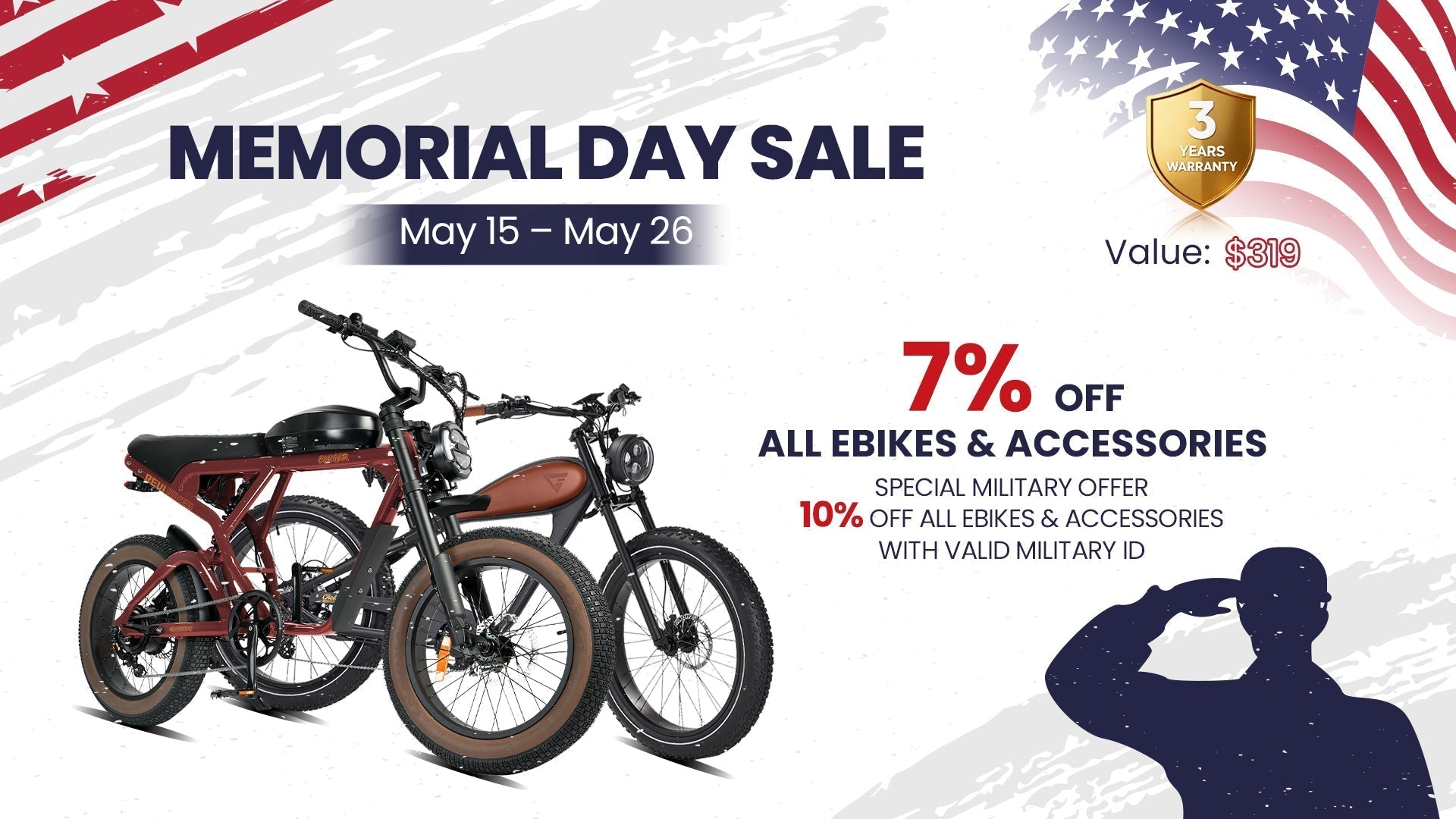
Honoring Memorial Day with a look back at the "Liberty Bikes" and forward to the silent, electric future.
Memorial Day is more than just the unofficial start of summer. It is a day of profound remembrance—a time to honor the men and women who made the ultimate sacrifice for our freedom. Here at Revibikes, we owe our ability to ride freely to those who served.
As we fire up our electric motors for a quiet cruise this weekend, it is worth looking back at the machines that paved the way. When we designed the Revibikes Cheetah, we knew it had to capture a specific spirit: the rugged, go-anywhere, utilitarian attitude of the classic military motorcycle.
But what did the soldiers of World War II actually ride? And how does a modern electric fat-tire bike compare to the steel steeds of the 1940s?
Let’s take a ride through history.
The Original "Freedom Fighters": The Harley-Davidson WLA
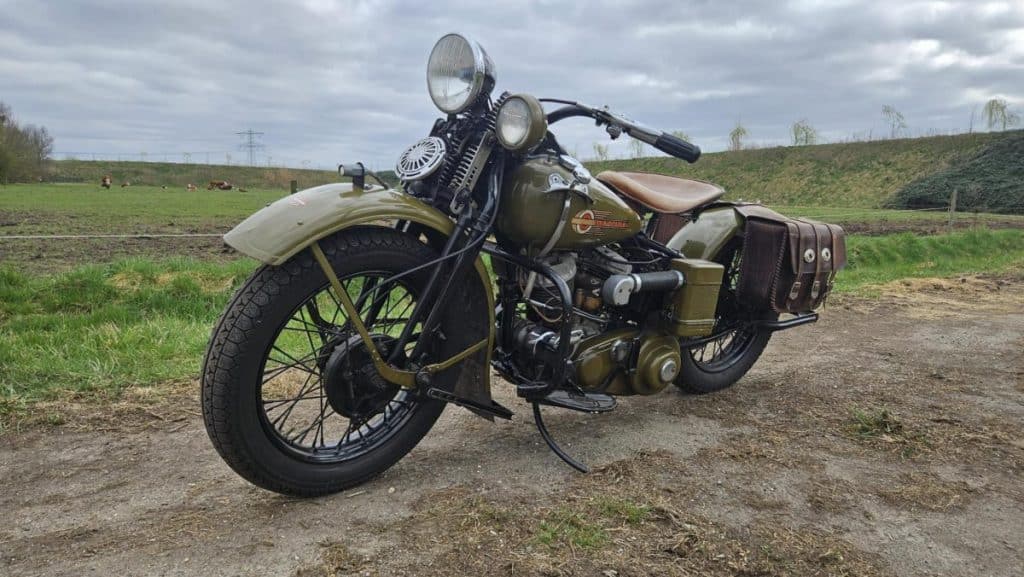
When you picture a soldier on a motorcycle in WWII, you are likely picturing the Harley-Davidson WLA.
Nicknamed the "Liberator," the WLA was the backbone of the U.S. military’s ground mobility during the 1940s . These bikes were a marvel of wartime engineering. They weren't luxury cruisers, they were tools. Here is what defined them.
https://ultimatemotorcycling.com/2011/05/26/2011wheels-through-time-memorial-day-special/
-
The 45ci Engine: A side-valve V-twin that was nearly indestructible. It wasn't the fastest (topping out around 65 mph), but it could take a beating and keep running.
-
The Olive Drab Paint: Function over form. It was matte and dark to help soldiers blend into the foliage of Europe and the Pacific.
-
Utility Features: They came with rifle scabbards, blackout lights (only a small slit of light to avoid enemy aircraft), and heavy-duty racks for carrying radio equipment or ammunition .
Over 90,000 of these units were built. They were used for reconnaissance, escorting convoys, and carrying dispatches between units.
The "Silent" Threat: The BMW R75
On the other side of the wire, the Axis powers had their own beasts. The BMW R75 and the Zundapp KS 750 were engineering masterpieces. Unlike the solo-seat Harleys, these were often heavy-duty rigs with sidecars.
What makes these relevant to us today? They were the first to heavily utilize shaft drive and advanced suspension systems to handle the brutal terrain of the North African desert . They were heavier, more complex, and featured reverse gear—luxuries the American bikes didn't have.
Why the "Cheetah" Carries the Torch
So, where does Revibikes fit into this history? We aren't building a gas-powered WLA replica. We are building the next chapter of that story.
The soldiers of WWII needed bikes that were agile, durable, and reliable. Today, veterans, first responders, and everyday riders need the same things—but with modern tech.
The Revibikes Cheetah was born from that utilitarian DNA. Here is how the Cheetah honors the legacy of the WLA.
1. The "Go Anywhere" Attitude (Scrambler DNA)
The WLA was an early "scrambler." It had high fenders and knobby tires to clear mud and debris. The Cheetah takes this to the next level with fat tires. Whether you are navigating sandy beach trails (like the Desert Rats of WWII) or urban potholes, the Cheetah grips the terrain with the same confidence as the old guard.
2. The Low-Step-Over Frame (Accessibility)
Military bikes had to be mounted quickly while carrying heavy gear. The Cheetah features a step-thru (or low step-over) frame design that mimics the easy mounting of vintage military bikes. You don't need to be a gymnast to swing a leg over the Cheetah.
3. Stealth Mode
Perhaps the biggest contrast between a 1942 WLA and a 2026 Revibikes Cheetah is the noise—or lack thereof. The WLA was loud. You could hear it coming from a mile away, which wasn't always great for reconnaissance.
Today, electric motorcycles and e-bikes are being tested by modern armies (like the French Army) specifically for their silent running and low thermal signature . The Cheetah offers that same stealth. You can ride at dawn to watch the sunrise without waking the neighbors—a luxury those GIs in France in 1944 would have killed for.
https://www.motorcycleclassics.com/classic-motorcycle-touring/the-quail-motorcycle-gathering-2015/
4. Payload and Utility
A WWII bike was built to carry a rider, a passenger, or a lot of gear. The Cheetah maintains that utility with a sturdy rear rack and a high payload capacity. Whether you are carrying groceries or fishing gear, the Cheetah is a workhorse, just like the "Liberator."
This Memorial Day: Ride with Purpose
As you take your Revibikes Cheetah out this Memorial Day weekend, take a moment to appreciate the lineage of the two-wheeled warrior.
The men who rode the Harley WLAs and the Indian 841s were often very young, very far from home, and tasked with carrying messages through dangerous territory . They rode through rain, mud, and gunfire so that we could enjoy the simple pleasure of a sunset cruise.
At Revibikes, we strive to build bikes that embody that rugged, American spirit—even if we are powered by batteries, not gasoline.
From all of us at Revibikes, thank you to the fallen, the veterans, and the families who sacrificed everything.
共有:
Best eBike for Moms 2026: Comfort, Style, and Everyday Freedom
Showroom-Level Chrome Beauty - Ultimate Aesthetics Revibikes Cheetah