

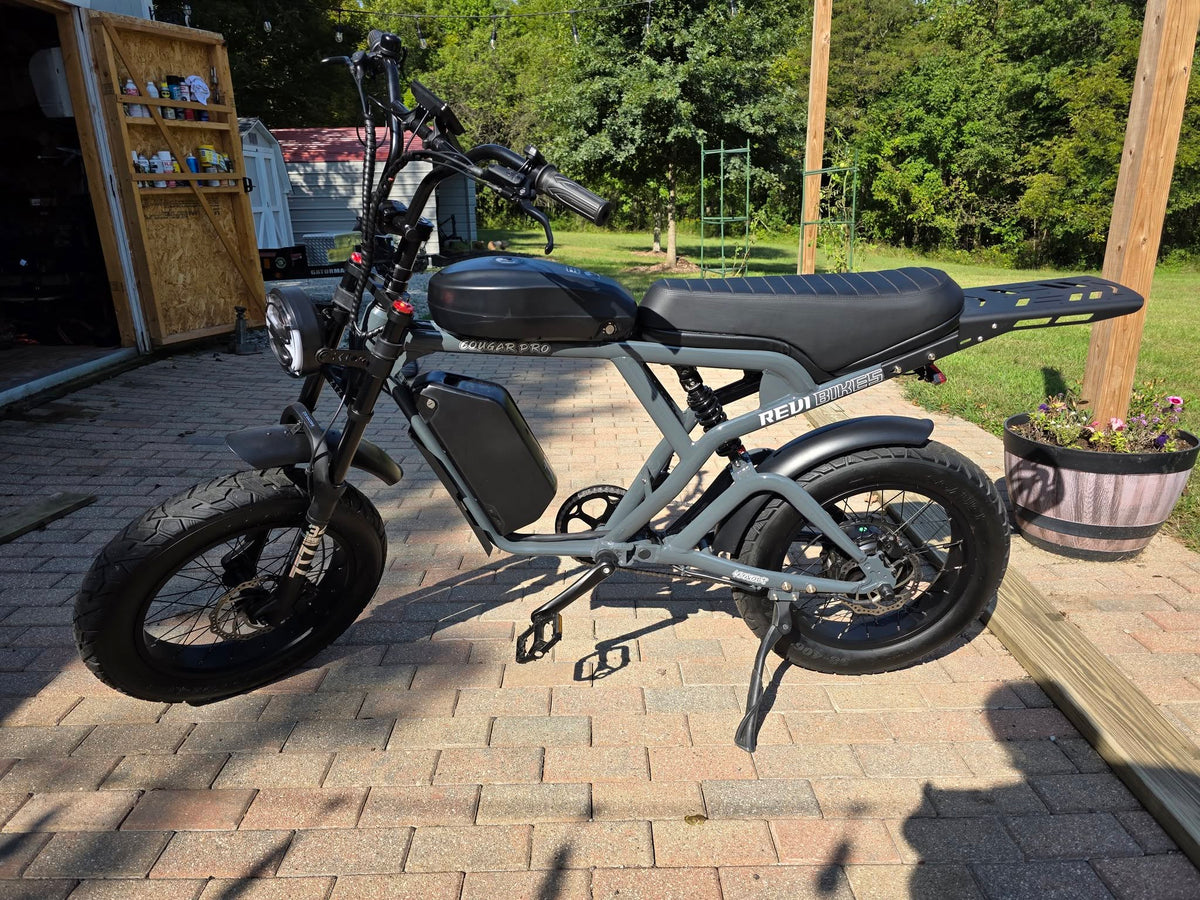
Choosing an electric bike can be harder than it looks.
There are folding eBikes, fat tire eBikes, commuter bikes, full-suspension models, high-power eBikes, and compact city bikes. Different models are designed for very different riding situations.
The most expensive eBike is not necessarily the right one for you. The best choice depends on where you ride, how far you ride, how much power you need, and what features matter most to you.
This guide will help you understand the most important differences so you can choose an eBike that fits your lifestyle.
1. Start With Where You Ride
Before comparing motors, batteries, or displays, think about your typical riding environment.
Do you mainly ride on:
- City streets?
- Bike paths?
- Gravel roads?
- Beach or sand?
- Hilly roads?
- Rough trails?
- A combination of different surfaces?
Your riding environment should influence almost every other decision.
City and Commuting
If most of your rides are on paved roads, a comfortable commuter-style eBike may be all you need.
You may want to prioritize:
- Comfortable riding position
- Good battery range
- Integrated lights
- Fenders
- Rear racks
- Easy handling
- Reasonable overall weight
You don't necessarily need the largest motor or widest tires for everyday commuting.
Gravel and Mixed Terrain
If your routes regularly switch between pavement, gravel, dirt roads, and uneven surfaces, look for an eBike with wider tires and a more durable frame.
A suspension fork can also improve comfort when riding over rougher surfaces.
Sand, Snow, and Loose Terrain
Fat tires are particularly useful when riding on surfaces where narrow tires can easily sink or lose traction.
The wider contact patch of fat tires can provide additional stability on sand, snow, and loose ground.
However, fat tires can also add rolling resistance and weight on pavement.
2. How Much Motor Power Do You Need?
Motor power is one of the first specifications people look at when buying an eBike.
You'll commonly see numbers such as 500W, 750W, 1000W, and higher.
But the wattage printed on a product page doesn't tell the entire story.
Real-world performance can also depend on:
- Motor torque
- Controller output
- Battery voltage
- Rider weight
- Terrain
- Tire size
- Riding mode
- Local regulations
Is 750W Enough for an eBike?
For many riders, a 750W-class eBike provides a useful balance between acceleration, hill-climbing ability, and battery consumption.
It can be suitable for commuting, recreational riding, and moderate hills.
If you frequently ride steep hills, carry heavier loads, or want stronger acceleration, you may want to consider a higher-output system.
What About 1000W or More?
Higher-power eBikes can provide stronger acceleration and more assistance on demanding terrain.
However, more power can also mean:
- Higher energy consumption
- More weight
- Higher component demands
- Potentially different legal requirements
Before purchasing a high-power eBike, check the regulations where you plan to ride.
3. Battery Size Matters More Than You Think
Motor power gets a lot of attention, but battery capacity is just as important.
Battery capacity is commonly expressed in amp-hours (Ah) and watt-hours (Wh).
A simple way to compare battery energy is:
Voltage × Amp-hours = Watt-hours
For example, a 48V 17.5Ah battery has approximately:
48 × 17.5 = 840Wh
A higher Wh rating generally means more stored energy.
However, advertised range is not guaranteed.
Your actual range depends on:
- Rider weight
- Speed
- Terrain
- Wind
- Tire pressure
- Temperature
- PAS level
- How often you accelerate
- Cargo weight
If long-distance riding is important to you, don't look at motor wattage alone. Pay close attention to battery capacity.
4. Fat Tire eBike vs. Regular Tire eBike
This is another important decision.
Fat Tire eBike
Fat tires are typically designed to provide additional stability and traction.
They can be useful for:
- Sand
- Snow
- Gravel
- Loose dirt
- Uneven surfaces
- Recreational off-road riding
They also create a distinctive riding feel and appearance.
Regular Tire eBike
Narrower tires generally make more sense for riders who spend most of their time on paved roads.
They can offer:
- Lower rolling resistance
- Easier handling
- Less weight
- Efficient pavement riding
Neither design is universally better. The right choice depends on your riding environment.
5. Folding eBike vs. Full-Size eBike
Do you have limited storage space?
If so, a folding eBike can make a major difference.
A folding model can be useful for:
- Apartments
- RVs
- Boats
- Car transportation
- Small garages
- Multimodal commuting
The trade-off is that folding bikes may have a different riding feel compared with a full-size frame.
If portability is not important to you, a full-size eBike may provide a more traditional riding position and larger-frame feel.
6. Do You Need Suspension?
Suspension can make a noticeable difference when riding over rough surfaces.
Front Suspension
A suspension fork can absorb impacts from:
- Cracks
- Gravel
- Small rocks
- Potholes
- Uneven pavement
For mixed-terrain riders, front suspension can be a useful upgrade.
Full Suspension
Full-suspension eBikes add rear suspension as well.
They can be particularly useful for riders who regularly encounter rougher trails and uneven terrain.
However, full-suspension systems generally add weight, complexity, and cost.
If you mainly ride smooth pavement, you may not need full suspension.
7. Think About Your Riding Position
Comfort is often overlooked when comparing specifications.
Consider whether you prefer:
- Upright riding
- A more aggressive position
- A relaxed cruiser-style position
- A compact riding position
Handlebar design, stem adjustment, saddle position, and frame geometry can all affect how the bike feels after an hour of riding.
A bike that looks impressive on a specification sheet may not be comfortable for your body or riding style.
8. How Far Do You Actually Need to Ride?
Don't automatically pay for the biggest battery available.
Think about your real riding habits.
For example:
Short Daily Trips
If your typical ride is only 5–10 miles, a moderate-size battery may be sufficient.
Daily Commuting
If you ride 15–30 miles per day, battery capacity becomes much more important.
Long Recreational Rides
For longer rides, consider a larger battery or a model designed to support extended range.
If your route includes many hills, remember that the same battery can provide significantly different range compared with flat-road riding.
9. What Features Are Actually Worth Paying For?
Modern eBikes can come with a long list of features.
Some may be extremely useful for you, while others may not matter at all.
Useful Features to Consider
Hydraulic disc brakes
Can provide strong braking performance and good control.
Adjustable stem
Useful for riders who want to fine-tune their riding position.
Integrated lights
Convenient for commuting and evening rides.
Rear rack compatibility
Helpful if you carry groceries, bags, or other cargo.
Fenders
Useful for wet roads and muddy conditions.
NFC or keyless access
Can provide an additional way to secure and access the bike.
Torque sensing
Can provide a more responsive and natural-feeling pedal-assist experience.
The key is to pay for features that match how you actually ride.
10. How Much Should You Spend on an eBike?
Price should be considered together with the components and intended use.
Instead of asking:
“What is the cheapest eBike?”
A better question is:
“What specifications do I actually need?”
A budget-friendly bike may be perfect for occasional neighborhood rides.
A more capable model may make more sense if you ride every day, travel longer distances, carry cargo, or regularly ride on challenging terrain.
The goal isn't to buy the bike with the longest specification list.
The goal is to find the right combination of motor, battery, tires, suspension, brakes, comfort, and features for your needs.
eBike Buying Checklist
Before placing your order, ask yourself these questions:
Where will I ride?
Pavement, gravel, sand, snow, trails, or a mixture?
How far will I ride?
Estimate your normal daily distance rather than relying only on the maximum advertised range.
Do I need portability?
If you need to transport your bike in a car or store it in a small space, consider a folding model.
How much power do I need?
A 750W-class system may be enough for many riders, while riders dealing with steep terrain or heavier loads may want more power.
Do I need suspension?
For smooth pavement, it may not be necessary. For rougher terrain, suspension can improve comfort and control.
What accessories will I use?
Think about racks, fenders, lights, baskets, passenger accessories, and other equipment before choosing your bike.
What are the local eBike rules?
eBike classifications, speed limits, power restrictions, and where you can ride vary by location. Always check the regulations that apply to your area.
Frequently Asked Questions
What is the best eBike for beginners?
There isn't one model that is right for every beginner. A good starting point is to choose an eBike that matches your normal riding environment, distance, and desired comfort level rather than focusing only on motor power.
Is a 750W eBike enough?
For many riders, yes. A 750W-class eBike can provide strong assistance for commuting, recreational riding, and moderate hills. Your actual experience will depend on the motor system, rider weight, terrain, and local speed regulations.
Is a fat tire eBike better?
Fat tires can provide additional stability and traction on sand, snow, gravel, and other loose surfaces. For mostly paved riding, narrower tires may be more efficient and easier to handle.
Is a folding eBike worth it?
A folding eBike can be especially useful if storage space or transportation is important. If portability isn't a concern, a full-size eBike may better match your preferences.
How many miles can an eBike go on one charge?
There is no universal range number. Battery capacity, rider weight, speed, terrain, wind, temperature, tire pressure, and riding mode can all affect range.
Should I buy a higher-voltage eBike?
A higher-voltage system can support different performance characteristics, but voltage alone does not determine the overall quality or range of an eBike. Consider the complete motor, controller, battery, and bike system.
What should I look for when buying an eBike?
Start with your riding environment and distance. Then compare motor output, battery capacity, tire type, suspension, brakes, frame design, comfort, accessories, and local regulations.
Final Thoughts
Choosing an eBike doesn't have to mean comparing dozens of specifications without knowing what they mean.
Start with your lifestyle.
If you commute every day, prioritize comfort, range, and practical features. If you ride on sand or loose terrain, look closely at tire size and traction. If you have limited storage space, a folding design may be more important than maximum power. If you regularly ride rough trails, suspension and braking performance deserve more attention.
The right eBike is the one that fits the way you actually ride.
Once you know your priorities, comparing different eBike models becomes much easier.
共有:
Why eBikes Make It Easier to Ride More Often