

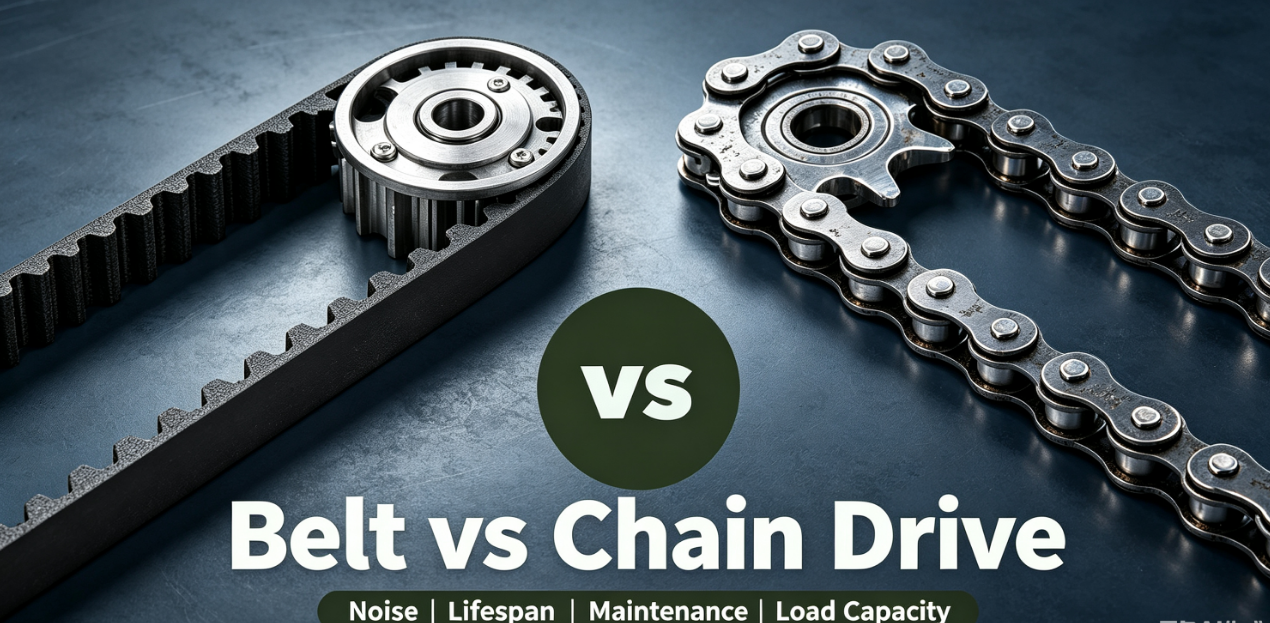
When choosing an eBike, the drivetrain is easy to overlook—but it can have a major impact on how your bike feels, sounds, and performs.
The two most common options are belt drive and chain drive.
A chain drivetrain is versatile and commonly paired with multiple gears. A belt drivetrain is quieter, cleaner, and requires less routine maintenance.
So, which is better: belt drive or chain drive?
There is no single answer. The right choice depends on your riding style, terrain, and how much maintenance you want to do.
Belt Drive vs. Chain Drive: Quick Comparison
| Feature | Belt Drive | Chain Drive |
|---|---|---|
| Maintenance | Low | Higher |
| Lubrication | No oil required | Regular lubrication |
| Noise | Very quiet | More mechanical noise |
| Cleanliness | Clean and grease-free | Can attract dirt and grease |
| Gearing | Often single-speed | Usually multi-speed |
| Hill flexibility | Moderate | Excellent |
| Durability | Excellent | Excellent with proper maintenance |
| Best for | Commuting & cruising | Hills & varied terrain |
What Is a Belt Drive eBike?
A belt-drive eBike uses a reinforced belt instead of a traditional metal chain to transfer power from the crank to the rear wheel.
Unlike a chain, a belt does not require regular lubrication. It also produces very little drivetrain noise and doesn't leave greasy residue on your hands or clothing.
That makes belt-drive bikes particularly attractive for commuters, casual riders, and people who want a low-maintenance eBike.
What Is a Chain Drive eBike?
A chain-drive eBike uses a traditional metal chain to transfer power to the rear wheel.
The biggest advantage is gear flexibility.
A chain can work with a cassette and derailleur, allowing riders to switch between different gears. Lower gears make climbing easier, while higher gears are useful for faster riding on flat roads or downhill sections.
For riders who regularly encounter steep hills, changing terrain, or long climbs, this flexibility can make a significant difference.
Why Do Belt-Drive eBikes Often Use a Single-Speed Setup?
This is an important point—and it's also commonly misunderstood.
A belt drive doesn't automatically mean that a bike must be single-speed.
However, most belt-drive eBikes use a simpler drivetrain configuration because traditional derailleur-and-cassette systems are designed around flexible metal chains.
A conventional setup looks like this:
Chain + Cassette + Derailleur = Multiple Gears
A common belt-drive setup looks like:
Belt + Single Rear Sprocket = Single-Speed
A belt-drive system can still be designed with other types of internal gearing, but these systems are more specialized and can increase complexity and cost.
So when comparing a typical belt-drive eBike with a typical chain-drive eBike, the chain-drive model usually offers more mechanical gear options.
Does Single-Speed Mean Less Motor Power?
No.
This is one of the biggest misconceptions about belt-drive eBikes.
The drivetrain and the motor are two different systems.
Switching from a chain to a belt does not automatically reduce the motor's wattage or torque.
For example, an eBike can have:
- A single-speed belt drivetrain
- A powerful hub or mid-drive motor
- A large-capacity battery
- Throttle assistance
- Multiple levels of pedal assist
The motor can still provide the same electrical output.
What changes is the mechanical gear ratio available to the rider, not the motor's power.
Can a Single-Speed eBike Climb Hills?
Yes—but the motor and gear ratio matter.
On a traditional bicycle, riders depend heavily on mechanical gearing to climb hills.
On an eBike, the motor provides additional assistance, so a single-speed eBike can still handle hills effectively.
Hill-climbing performance depends on several factors:
- Motor torque
- Motor power
- Battery voltage
- Rider and cargo weight
- Hill gradient
- Gear ratio
- Tire pressure
- Riding speed
However, a multi-speed drivetrain gives the rider more control over pedaling effort, especially on long or steep climbs.
Belt Drive Pros and Cons
Advantages of Belt Drive
Low maintenance
No regular chain lubrication is required.
Quiet riding
The belt produces very little drivetrain noise.
Cleaner
No chain grease means fewer dirty hands, clothes, and bike components.
Great for commuting
It is convenient for everyday riders who want to spend less time maintaining their bike.
Disadvantages of Belt Drive
Usually fewer gears
Many belt-drive eBikes use a single-speed setup.
Less flexibility on steep hills
Without multiple mechanical gears, the rider has fewer options to adjust pedaling resistance.
Can require specialized components
Belt systems use specific sprockets, belts, and frame designs, which may not be as universally available as chain components.
Chain Drive Pros and Cons
Advantages of Chain Drive
Multiple gears
Excellent for climbing, flat roads, and changing terrain.
More familiar technology
Most bike shops are experienced with chain drivetrains.
Easy to replace components
Chains, cassettes, and other components are widely available.
Great for varied terrain
Multiple gears give riders more control over cadence and pedaling effort.
Disadvantages of Chain Drive
More maintenance
Chains need cleaning and lubrication.
More noise
A chain drivetrain generally produces more mechanical noise than a belt.
Can get dirty
Oil and grease can collect dirt and transfer onto clothing.
Belt Drive vs. Chain Drive: Which Is Better for an eBike?
The answer depends on how you ride.
Choose Belt Drive If You:
- Mostly ride on paved roads
- Use your eBike for commuting
- Prefer a quiet ride
- Don't want to regularly lubricate a chain
- Value simple maintenance
- Prefer a clean drivetrain
Choose Chain Drive If You:
- Frequently ride steep hills
- Ride on varied terrain
- Want multiple gears
- Prefer more control over pedaling resistance
- Regularly ride longer or more demanding routes
Belt Drive vs. Chain Drive: Final Verdict
Neither drivetrain is universally better.
Belt drive is about simplicity.
It's quiet, clean, and low-maintenance, making it an excellent choice for commuting and everyday riding.
Chain drive is about versatility.
Its multiple gears provide greater flexibility for hills, varied terrain, and riders who want more control over their pedaling.
And if you're considering a belt-drive eBike, don't assume that single-speed means less motor power. The motor's power comes from the motor and electrical system, while the drivetrain determines how that power is mechanically transferred to the rear wheel.
Choose the drivetrain that matches the way you actually ride—not simply the one that looks better on paper.
FAQ
Is a belt drive better than a chain drive on an eBike?
Not necessarily. Belt drives are quieter and require less maintenance, while chain drives offer more gearing flexibility.
Does a belt drive eBike have less power?
No. Changing from a chain to a belt does not inherently reduce motor power or torque.
Are belt-drive eBikes good for hills?
Yes, especially when paired with a sufficiently powerful motor and appropriate gear ratio. However, a multi-speed chain drivetrain gives riders more mechanical flexibility on steep climbs.
Do belt-drive eBikes need maintenance?
Yes, but generally less routine maintenance than chain-drive systems. Belts don't require chain oil and are less prone to grease and dirt buildup.
Can a belt-drive eBike have multiple gears?
Yes. Belt-drive systems can use specialized internally geared hubs or other gearing solutions. However, many belt-drive eBikes are designed as single-speed bikes for simplicity.
共有:
How to Adjust the Rear Shock on Your Revi Bikes Cougar
eBike Brake Sensor Keeps Cutting Motor Power? How to Fix It