

A properly adjusted rear shock can make a big difference in your Revi Bikes Cougar. If the rear suspension feels too soft, too stiff, or bounces too much, adjusting the air pressure, spring preload, and rebound can improve comfort, stability, and control.
This guide explains how to adjust the FASTACE rear shock and find the right setup for your riding style.

1. Know the Three Main Adjustments
The FASTACE rear shock has three key adjustments:
- Air Pressure: Controls the compression resistance and overall firmness.
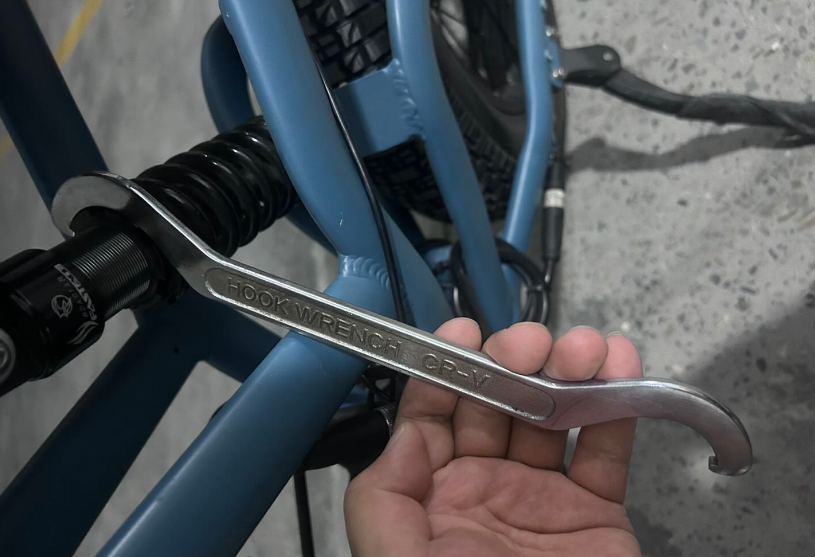
- Spring Preload: Adjusts the initial compression of the coil spring.
- Rebound: Controls how quickly the shock returns after being compressed.
The FASTACE BDA01AR shock has:
- Air pressure: 50–180 PSI (3.4–13.8 bar)
- Factory air pressure: Approximately 150 PSI
- Preload adjustment: Approximately 1–10 mm
- Rebound: 18 adjustment positions
Your ideal settings depend on rider weight, spring specification, cargo, road conditions, riding style, and personal preference.
2. Check the Shock Before Adjusting
Before making any adjustments, inspect the rear shock for:
- Oil leaks
- A damaged spring
- Loose mounting hardware
- Damaged bushings
- Excessive play
- Damaged threads
- Unusual noises
- A loose spring
- Damage around the air valve
Make sure the spring and adjustment components are securely installed before riding.
If you find significant damage, leaking oil, or abnormal movement, have the shock inspected by a qualified technician instead of continuing to adjust it.
3. Adjust the Air Pressure
Use a high-pressure suspension pump to check and adjust the air pressure.
The recommended range for the FASTACE shock is 50–180 PSI, with approximately 150 PSI as the factory setting.
If the suspension feels too soft:
Gradually increase the air pressure.
This provides more compression resistance and a firmer feel.
If the suspension feels too stiff:
Gradually decrease the air pressure.
This allows the suspension to respond more easily to small bumps.
Always stay within the manufacturer's recommended pressure range.
Important:
Do not assume that 150 PSI is the perfect setting for every rider. A heavier rider, heavier cargo load, or rougher terrain may require a different setup.

4. Adjust the Spring Preload
The preload adjustment changes how much the coil spring is compressed before the bike is loaded.
The FASTACE shock provides approximately 1–10 mm of preload adjustment.
Increase preload if:
- The rear of the bike sits too low
- The suspension compresses too easily
- You frequently carry heavy cargo
- You want more support from the rear suspension
Reduce preload if:
- The suspension feels too stiff
- Small bumps feel harsh
- You want a softer and more comfortable ride
Make adjustments gradually and test the bike after each change.
Preload vs. Spring Rate
Preload is not a replacement for the correct spring rate.
If the preload has reached approximately 10 mm but the suspension is still too soft or uses too much travel, a higher-rate spring may be needed.
If the preload is already close to 1 mm but the suspension is still too stiff or does not provide enough usable movement, a lower-rate spring may be more appropriate.
5. Adjust the Rebound
Rebound controls how quickly the rear shock returns after being compressed.
The FASTACE shock provides 18 rebound adjustment positions.
If the rebound is too fast:
You may notice:
- Excessive bouncing
- The rear of the bike quickly kicks back after bumps
- An unstable feeling after hitting uneven surfaces
Turn the rebound adjustment toward SLOW to reduce the rebound speed.
If the rebound is too slow:
You may notice:
- The suspension feels sluggish
- The rear shock does not recover quickly
- The bike feels increasingly compressed over repeated bumps
- The suspension seems to "pack down"
Turn the adjustment toward FAST to increase the rebound speed.
6. The Best Adjustment Order
For easier suspension setup, adjust your Cougar in this order:
Air Pressure → Preload → Rebound
First, establish a comfortable air-pressure setting.
Then adjust the spring preload to achieve the desired support.
Finally, fine-tune the rebound speed.
Do not make major changes to all three settings at once. Make one adjustment, take a short test ride, and then decide whether another adjustment is needed.
7. Setup Suggestions for Different Riding Conditions
City Riding
For smooth pavement:
- Use a comfortable air-pressure setting
- Avoid excessive preload
- Use moderate rebound
- Focus on comfort and control
Rough Roads
For potholes, broken pavement, gravel, and uneven roads:
- Avoid excessive air pressure
- Allow the suspension to move freely
- Avoid excessive rebound damping
- Make small adjustments based on how the bike responds to repeated bumps
Heavy Cargo
If you frequently carry heavy cargo:
- Check whether the rear suspension is compressing too deeply
- Increase support gradually
- Adjust preload as needed
- If maximum appropriate preload is still not enough, consider whether a different spring rate is required
Your ideal settings will depend on rider weight, spring specifications, road conditions, cargo, and personal preference.
8. Common Cougar Rear Shock Problems
| Problem | Possible Solution |
|---|---|
| Rear suspension feels too soft | Increase air pressure or preload |
| Rear suspension feels too stiff | Decrease air pressure or preload |
| Bike bounces after bumps | Turn rebound toward SLOW |
| Suspension recovers too slowly | Turn rebound toward FAST |
| Rear of bike sinks too much | Increase support and check preload |
| Maximum preload still feels too soft | Consider a higher-rate spring |
| Minimum preload still feels too stiff | Consider a lower-rate spring |
| Suspension packs down over repeated bumps | Increase rebound speed |
| Rear end kicks back quickly | Slow down the rebound |
9. A Simple Example of Fine-Tuning
You can start with the factory air-pressure setting of approximately 150 PSI and then adjust according to how your Cougar feels.
For example:
Air Pressure: 150 PSI → test → adjust if necessary
Preload: Start with a moderate setting → test → adjust
Rebound: Start from a middle setting → test → adjust toward FAST or SLOW
Once you find a setup you like, write down your settings. This makes it easy to return to the same setup later.
10. Safety Tips
Before riding after making adjustments:
- Make sure the spring is securely installed.
- Make sure the preload adjustment collar is secure.
- Make sure all shock mounting hardware is properly tightened.
- Stay within the 50–180 PSI air-pressure range.
- Do not force the adjustment dial beyond its available range.
- Make adjustments gradually.
- Test the bike at low speed first.
- Stop riding if you notice unusual noises, oil leakage, loose hardware, or abnormal suspension movement.
FASTACE also recommends confirming that the adjustment components and spring are securely fixed before use.
Final Thoughts
Adjusting your Revi Bikes Cougar rear shock doesn't have to be complicated.
Remember the three key settings:
Air Pressure → Preload → Rebound
- Too soft? Increase air pressure or preload.
- Too stiff? Reduce air pressure or preload.
- Too bouncy? Slow down the rebound.
- Too slow to recover? Speed up the rebound.
Start with the factory settings, make small changes one at a time, and test the bike after each adjustment.
With the right combination of air pressure, spring preload, and rebound, you can make your Cougar more comfortable, stable, and better suited to your weight, cargo, terrain, and riding style.
FAQ
What PSI should I use for the Cougar rear shock?
The FASTACE recommended range is 50–180 PSI, with approximately 150 PSI as the factory setting. The correct pressure depends on rider weight, spring specification, cargo, terrain, and personal preference.
How do I make the Cougar rear suspension softer?
Gradually reduce the air pressure or preload while staying within the manufacturer's recommended range.
How do I make the Cougar rear suspension firmer?
Gradually increase the air pressure or preload. If it remains too soft at the appropriate maximum preload, the spring rate may need to be evaluated.
Why does my Cougar bounce after bumps?
The rebound may be too fast. Turn the rebound adjustment toward SLOW and test again.
Why does the suspension feel slow over repeated bumps?
The rebound may be too slow. Turn the rebound adjustment toward FAST gradually and test again.
Should I adjust air pressure, preload, and rebound at the same time?
No. Adjust one setting at a time so you can clearly understand how each change affects the bike.
共有:
Best eBike for College Students: A Smarter Way to Get Around Campus in 2026
Belt Drive vs. Chain Drive: What’s the Difference?