

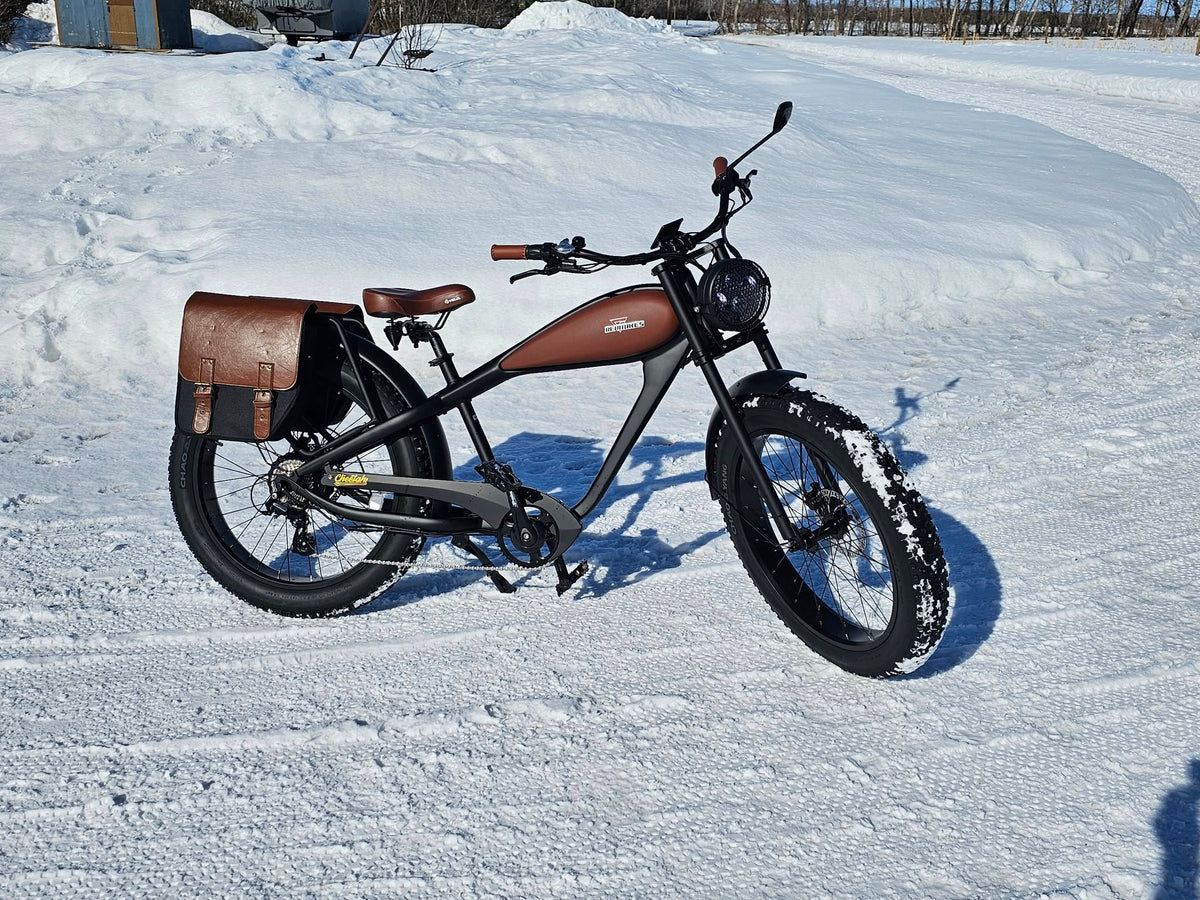
Winter Riding Is Different. Does Your E-Bike Have What It Takes?
Winter doesn't necessarily mean the end of riding season.
For some riders, colder weather brings a completely different kind of adventure. Quiet trails, crisp morning air, snowy paths, and fewer people on the road can make winter riding surprisingly enjoyable.
But riding in winter also comes with new challenges.
Wet roads, loose gravel, snow, colder temperatures, and reduced daylight can all affect how your electric bike performs.
One question many riders ask is:
Are fat tire e-bikes better than regular e-bikes for winter riding?
The answer depends on where you ride, the conditions you encounter, and what you expect from your bike.
Let's break down the differences and help you decide which type of e-bike is right for your next winter adventure.
1. What Makes Fat Tire E-Bikes Different?
The most noticeable difference is right in the name: the tires.
Regular electric bikes typically use narrower tires designed for paved roads, commuting, and everyday riding.
Fat tire e-bikes use much wider tires, often around 4 inches or more, depending on the model.
That wider contact area gives riders the option to run lower tire pressures within the tire manufacturer's recommended range, helping the tire conform to certain uneven surfaces.
Why do riders choose fat tires?
-
More flotation on suitable soft surfaces such as sand and some types of snow.
-
A more cushioned riding feel when properly inflated.
-
More confidence on certain loose or uneven surfaces.
-
A distinctive look that many e-bike enthusiasts love.
However, wider tires don't automatically mean better grip on every surface. Tire tread, rubber compound, pressure, and riding conditions all matter.
For winter riders, choosing the right tire is just as important as choosing the right motor or battery.
2. Fat Tires vs. Regular Tires: A Winter Comparison
Let's compare the two types across several important riding conditions.
| Riding Condition | Fat Tire E-Bike | Regular E-Bike |
|---|---|---|
| Dry pavement | Comfortable, but may feel heavier | Efficient and responsive |
| Wet pavement | Depends on tread and rubber | Depends on tread and rubber |
| Loose gravel | Often offers more flotation | Can feel less forgiving |
| Packed snow | Can provide useful flotation | More limited flotation |
| Deep snow | May perform better with suitable tires | Generally less suitable |
| Ice | Still slippery without specialized equipment | Still slippery without specialized equipment |
| Daily commuting | Comfortable but potentially heavier | Often more efficient |
The takeaway: Fat tire e-bikes can be a versatile choice for riders who encounter mixed terrain. However, neither tire type eliminates the risks of winter riding.
Ice requires particular caution. Even wide tires can lose traction suddenly on frozen surfaces.
3. Why Fat Tires Can Make a Difference on Snow
Snow is one of the biggest reasons riders consider fat tire electric bikes.
Unlike hard pavement, snow can shift and compress beneath your tires. A narrow tire may sink into softer snow, while a wider tire can spread the bike's weight over a larger area.
This is known as flotation.
When tire pressure is adjusted appropriately for the terrain and within the manufacturer's recommendations, a fat tire can provide a more stable riding experience on certain snowy surfaces.
However, not all snow is the same.
-
Fresh, soft snow: Wider tires can help prevent the bike from sinking as deeply.
-
Packed snow: Traction depends heavily on tire tread and surface conditions.
-
Slushy roads: Water and loose snow can make steering unpredictable.
-
Black ice: Extremely slippery. Even fat tires cannot guarantee grip.
If you regularly ride in snowy areas, consider winter-specific tires or properly studded tires where compatible.
And remember: slow down, avoid sudden braking, and leave plenty of stopping distance.
4. Don't Forget About Battery Performance in Cold Weather
Tires aren't the only thing affected by winter.
Cold weather can also influence your e-bike battery.
Lithium-ion batteries generally perform less efficiently at low temperatures. You may notice reduced range compared with riding in warmer weather.
The actual difference depends on temperature, battery condition, riding style, terrain, and how much assistance you use.
Here are a few ways to protect your battery during winter:
-
Store your battery indoors when possible.
-
Avoid charging a battery that is extremely cold.
-
Allow the battery to return to the temperature range recommended by its manufacturer before charging.
-
Start your ride with an appropriately charged battery.
-
Plan shorter routes when temperatures are especially low.
If you have a removable battery, bringing it indoors after your ride can help protect it from prolonged exposure to freezing conditions.
A larger battery can provide more capacity, but remember that cold weather can still affect its usable range.
5. Is a Fat Tire E-Bike Too Heavy for Winter?
This is another important consideration.
Fat tire electric bikes often have wider tires, stronger frames, and larger components. As a result, some models can weigh more than traditional commuter e-bikes.
That extra weight isn't necessarily a disadvantage.
For riders who prioritize comfort, a substantial frame and wider tires can make an e-bike feel more planted on suitable terrain.
However, weight also affects maneuverability, transportation, and how easily you can move your bike when the motor isn't helping.
Before choosing an e-bike, consider:
-
How often you need to carry or lift it.
-
Whether you store it upstairs or in a garage.
-
How much time you spend riding on pavement.
-
Whether you prioritize comfort or lightweight efficiency.
The best bike isn't necessarily the biggest one. It's the one that fits your everyday riding needs.
6. Five Winter Riding Tips Every E-Bike Owner Should Know
Regardless of which type of e-bike you own, winter riding requires a little extra preparation.
Tip 1: Check Your Tire Pressure
Cold temperatures can affect tire pressure. Check it before riding and stay within the tire manufacturer's recommended range.
Tip 2: Inspect Your Brakes
Wet roads and cold conditions can change braking performance. Make sure your brake pads and rotors are in good condition.
Tip 3: Keep Your Battery Warm
Store removable batteries indoors and follow the manufacturer's temperature recommendations for charging and operation.
Tip 4: Improve Your Visibility
Winter days are shorter. Use working front and rear lights, wear reflective clothing, and make yourself visible to other road users.
Tip 5: Adjust Your Riding Style
Avoid aggressive acceleration, sharp turns, and sudden braking. Increase your following distance and slow down on unfamiliar surfaces.
If conditions are icy or unsafe, the best decision may be to leave your e-bike at home.
7. Which Revi E-Bike Should You Consider?
If you're looking for an electric bike that can handle more than just ordinary city streets, Revi offers several different riding styles.
Here are three models worth exploring.
Revi Cheetah – For Riders Who Love Classic Style
The Revi Cheetah combines a distinctive motorcycle-inspired design with a powerful electric riding experience.
With its 750W Bafang motor, 48V 17.5Ah Samsung battery, and wide tires, it's designed for riders who want a comfortable ride and plenty of personality.
It's a great option for riders who enjoy cruising, exploring, and making their everyday rides more exciting.
Revi Cougar – For Riders Who Want a Bold Ride
Looking for something with a more aggressive appearance?
The Revi Cougar brings a bold design and powerful performance together.
It's suited to riders who want a distinctive electric bike for everyday adventures and mixed riding environments.
Revi Rebel.2 – For Practical Everyday Riding
Not everyone needs a large fat tire e-bike.
The Revi Rebel.2 offers a folding design that makes storage and transportation more convenient.
It's a practical choice for riders who want an electric bike that fits into a more compact lifestyle.
Explore the Revi lineup and find the riding style that fits you best.
Final Thoughts: Choose the Right Bike for Your Winter Adventures
So, are fat tire e-bikes better than regular e-bikes for winter riding?
For riders who frequently encounter loose gravel, soft snow, and uneven terrain, fat tires can offer useful advantages.
For riders who mainly commute on cleared roads and paved streets, a regular e-bike may be more efficient and easier to handle.
There is no one-size-fits-all answer.
What matters most is choosing a bike that matches your riding environment, maintaining it properly, and adjusting your riding habits to the weather.
Winter can be a great time to explore a different side of cycling. Just make sure you're prepared before heading out.
Stay warm, ride smart, and keep the adventure going.
— Team Revi Bikes
Share:
How to Prepare Your E-Bike for Long-Term Storage