

Your eBike battery shows full charge, but suddenly loses power. Or your bike turns on but shuts down when you accelerate.
Before buying a replacement battery, a simple multimeter test can help you understand whether the problem is the battery, charger, connection, or another electrical component.
This guide will show you how to safely test an e-bike battery, understand voltage readings, and determine whether further inspection is needed.
What Problem Are You Trying to Diagnose?
| Problem | Possible Cause |
|---|---|
| Battery won't turn on | BMS, connector, battery discharge issue |
| Battery charges but range is low | Aging cells, capacity loss |
| Bike shuts off uphill | Voltage sag, weak cells |
| Display turns on but motor stops | Battery output, controller, connection |
| Charger stays green | Charger, battery BMS, charging port |
What You Need Before Testing
To test your e-bike battery, prepare:
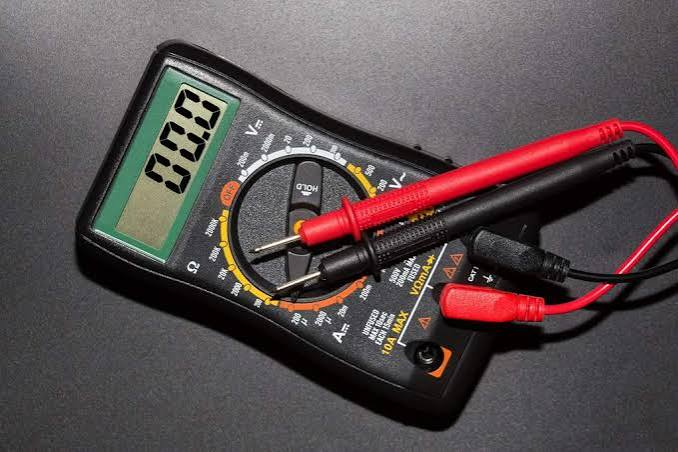
1. A Digital Multimeter
A standard digital multimeter is enough for checking battery voltage.
Make sure it can measure:
- DC Voltage (V⎓)
- At least 60V for most e-bike batteries
2. Know Your Battery Specifications
Before testing, check the label on your battery.
| Battery Type | Fully Charged Voltage |
|---|---|
| 36V Battery | Around 42V |
| 48V Battery | Around 54.6V |
| 52V Battery | Around 58.8V |
Important:
The number printed on the battery (such as 48V) is the nominal voltage, not the actual full-charge voltage.
Step 1: Turn Off Your eBike
Before testing:
- Turn off the bike.
- Remove the key if your battery has one.
- Disconnect the charger.
- Remove the battery from the bike if possible.
Never test a battery while it is charging.
Step 2: Set Your Multimeter Correctly
Set the multimeter to:
DC Voltage (V⎓)
Usually marked as:
- V with a straight line
- V DC
Do not use:
- AC Voltage (V~)
- Resistance mode (Ω)
Step 3: Locate the Battery Terminals
Find the positive (+) and negative (-) terminals.
They may be located:
- On the battery connector
- On the discharge port
- Inside the battery mount
The terminals are usually marked:
- Red = Positive (+)
- Black = Negative (-)
Step 4: Measure Battery Voltage
Place the probes:
- Red probe → Positive terminal (+)
- Black probe → Negative terminal (-)
The multimeter will display the battery voltage.
Example:
A fully charged 48V battery should show approximately:
54V–54.6V
Does Voltage Tell You If an eBike Battery Is Good?
Normal Voltage
Example:
48V battery:
| Reading | Condition |
|---|---|
| 54.6V | Fully charged |
| 50V–53V | Normal charge level |
| Around 48V | Medium charge |
| Below 42V | Very low / possible issue |
Low Voltage: What Does It Mean?
If your reading is much lower than expected, possible causes include:
1. Battery Is Not Fully Charged
Try:
- Fully charge the battery
- Test again after charging
2. Charger Problem
The charger may show:
- Green light
- Not charging battery
- Incorrect output voltage
Test:
- Charger output voltage
- Try another compatible charger if available
3. Battery BMS Protection
Lithium batteries have a Battery Management System (BMS).
The BMS protects the battery from:
- Overcharging
- Over-discharging
- Excessive current
- Short circuits
Sometimes the battery may temporarily shut down.
4. Battery Cell Degradation
Older batteries may show:
- Correct voltage when not under load
- Rapid voltage drop while riding
This can indicate reduced battery capacity.
Step 5: Test Voltage Under Load
A battery may show normal voltage but still fail when the motor demands power.
Symptoms:
- Bike turns on normally
- Motor starts but shuts off quickly
- Battery percentage drops suddenly
This may indicate:
- Weak battery cells
- BMS limitation
- Internal battery damage
A professional load test may be required.
Common Mistakes When Testing an eBike Battery
Mistake 1: Checking Voltage While Charging
The reading will not represent the actual battery condition.
Mistake 2: Measuring the Wrong Terminals
Always confirm:
- Positive (+)
- Negative (-)
Mistake 3: Assuming Voltage Equals Battery Health
Voltage only shows electrical potential.
It does not completely measure:
- Battery capacity
- Internal resistance
- Cell balance
When Should You Replace an eBike Battery?
Consider replacement if:
- Battery cannot hold charge
- Range decreases significantly
- Voltage drops quickly under load
- Battery shuts down frequently
- Battery is several years old with heavy use
Before Contacting Support, Prepare This Information
To help diagnose faster, provide:
Bike model
Battery voltage and capacity
Multimeter reading
Charger behavior
Video of the issue
Photos of battery label
Conclusion
Testing your e-bike battery with a multimeter is a simple way to understand whether your battery is receiving and maintaining the correct voltage.
However, voltage is only one part of battery health. If your battery shows normal voltage but your bike still has problems, the issue may come from the charger, controller, wiring, or another electrical component.
Share:
Why Is My eBike Turning On But Not Moving? Common Causes & Fixes
Ebike Charger Light Stays Green But Battery Won't Charge?